
Per this study from Profound, nearly 9% of ChatGPT’s billion-plus daily queries indicate commercial intent. Customers are using ChatGPT to move through the funnel: find brands, compare products, read review summaries, even research warranty and return info–-all without leaving the chat window until they’re ready to purchase.
Since ChatGPT power-users tend to research brands within the chat window they’re more likely to move “down funnel,” building affinity for your brand, or fall out of it entirely (discarding your brand) before visiting your site.
Key takeaway: make sure ChatGPT and similar AI platforms understand your brand, and your products’ value propositions. Do it and you’ll see ChatGPT sending its signature low-pageview, high-conversion traffic to your site.
4 STEPS TO CHATGPT VISIBILITY:
1.) Check robots.txt and unblock bots
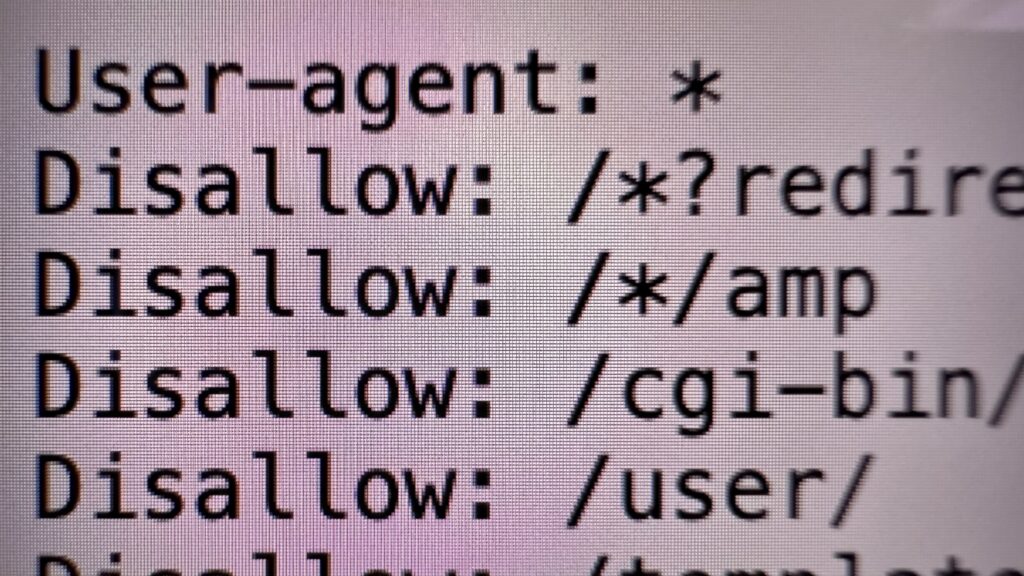
Don’t try to maintain a list of allowable bots; the scammers aren’t respecting your disallow and new useful bots are appearing all the time. Just disallow non-public or duplicate content URLS. FWIW, ChatGPT’s bot is OAI-SearchBot but they rely heavily on Microsoft’s BingBot.
2.) Make friends with Bing search
Start by signing your website up for Bing Webmaster Tools. ChatGPT uses Bing’s index and search API, and with Microsoft’s huge stake in OpenAI this partnership will likely grow. Bing WT setup can be as easy as a 1-click import from Google Search Console, which you’ve already got–right? Once you’re set up, fix the crawl errors and follow Bing’s priority recommendations.
3.) Revisit on-page SEO like it’s 2015:
Structured your data: ChatGPT wants to respond to commercial product queries with review summaries, pricing, dimensions & other physical specs, and PDP links. Structured data, specific markup within your site’s HTML, will highlight these bits of information to the bot. If you’re running an eCom site via one of the better platforms (Shopify, WooCommerce, etc) your products’ price, description, stock-status and reviews are likely all structured for Google snippets. Great, AI bots will parse that structure too. Consider what else you might markup: mission statements and any quantitative info (year founded, locations, name and number of awards won, etc) are good candidates.
If you’re selling services or non-eCom products you may need to add structured markup to your reviews, any prices, individual services or service packages, locations, etc. You’ll gain credibility with both AI bots and traditional search engines. Have your dev team check it out.
The bulk of decade old on-page SEO best practices are relevant – especially when it comes to Bing, ChatGPT’s search partner. Long form content, page titles, appropriately structured headings, and overall keyword relevancy are more heavily weighted in Bing, which in turn leads to better ChatGPT visibility. Share Bing Webmaster Tools’ page analysis with your content team and make some improvements. Links and brand citations are also key, even from “nofollow” and low page rank sources like online PR newswires.
4.) Sign up for ChatGPT’s Product Feed
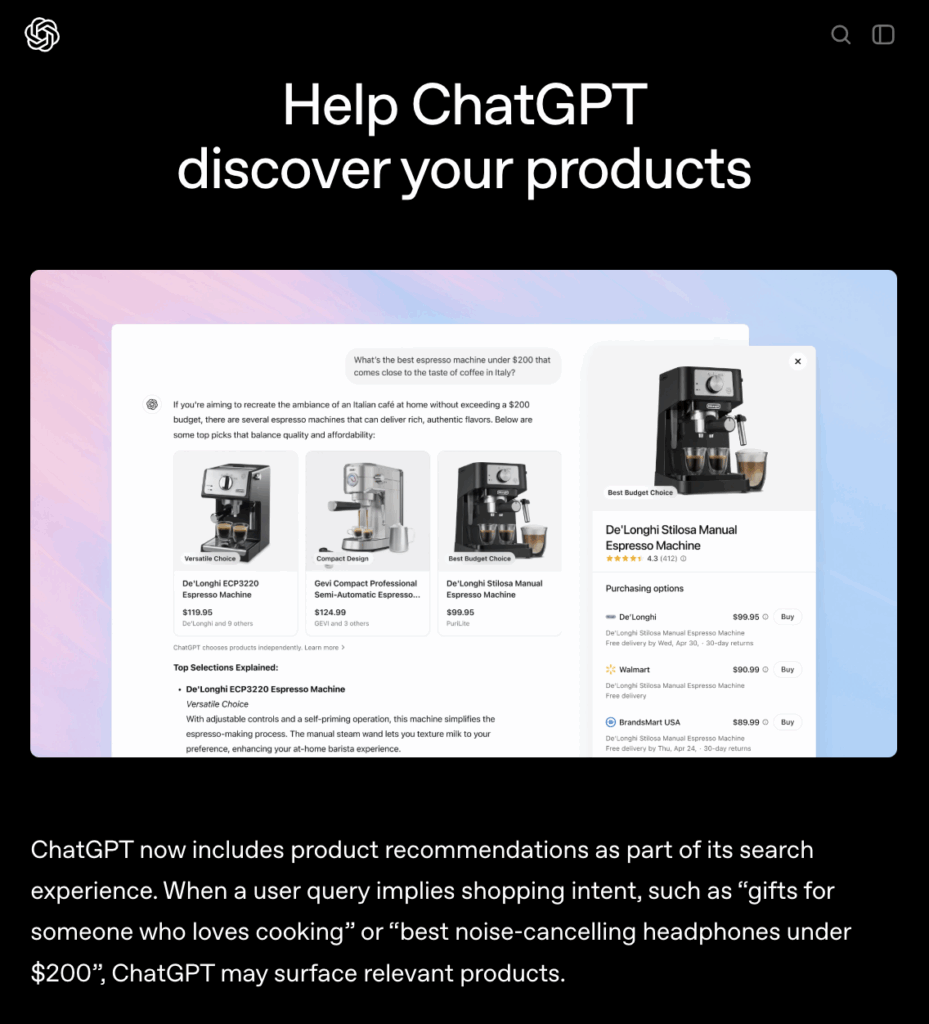
After taking steps 1-3 your products will be more likely to appear in ChatGPT (ask it and see!) but OpenAI is looking to formalize the process via a product feed. It has yet (7/28/25) to open to the public but sign up to be notified once it does on OpenAI’s Product Discovery page.
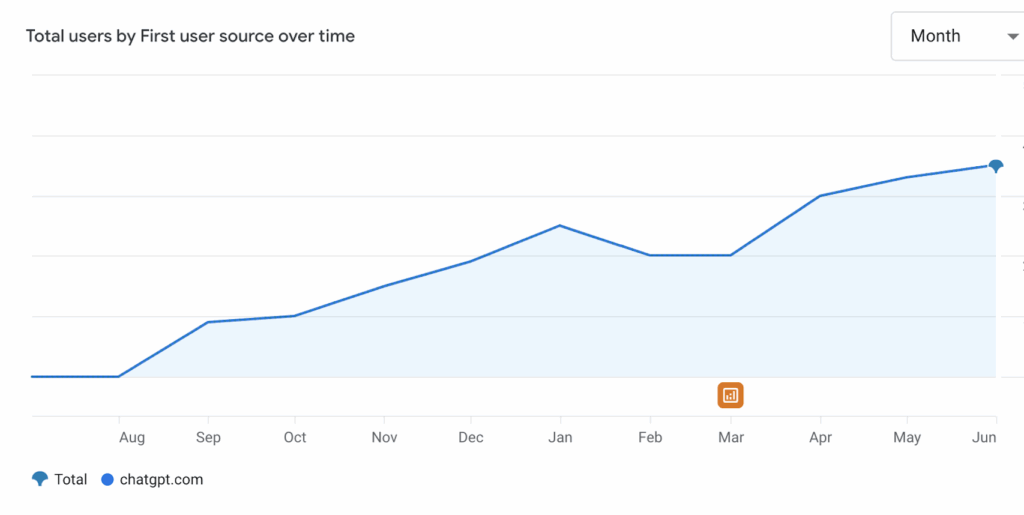
Meanwhile, check your Google Analytics traffic source reports. You should already see ChatGPT-referred traffic in there!
AI marketing AI optimization Product discovery in ChatGPT
Last modified: September 9, 2025